Southend Seafront After a Messy Night Still Holds Me
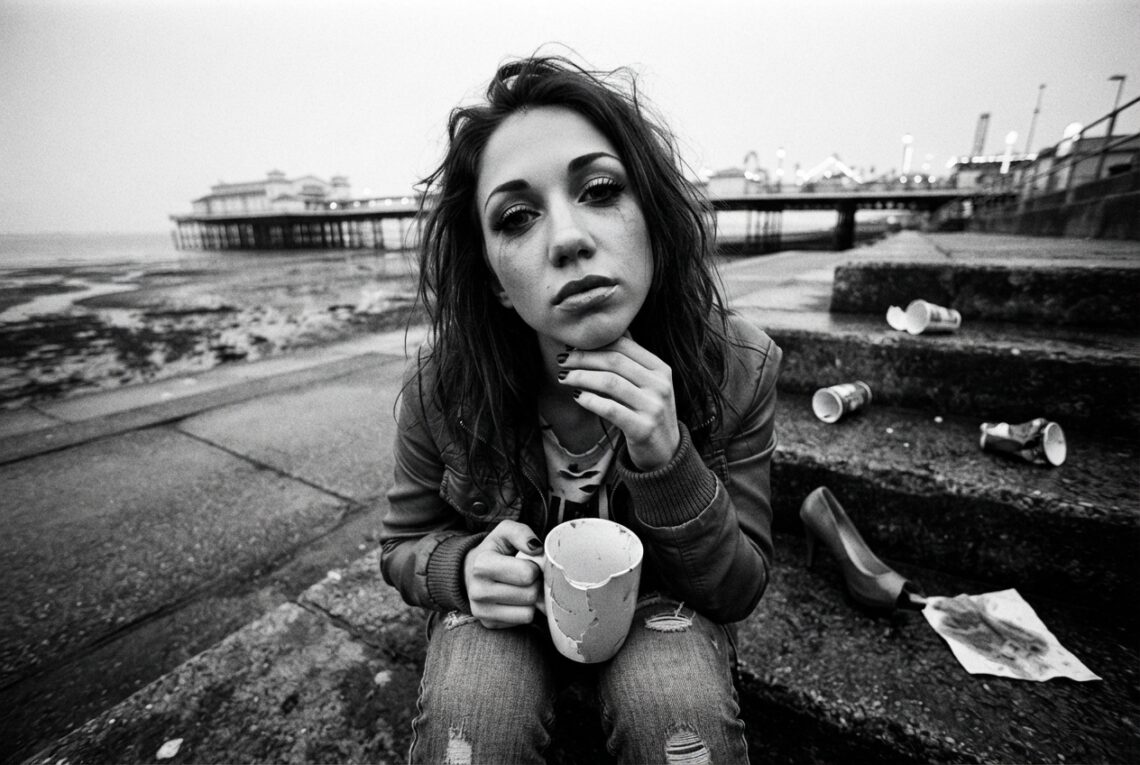
Southend seafront after a messy night still holds me. I do not mean that as poetry first. I mean it as fact. Cold air. Heels in one hand. The water doing too much, all that theatrical silver, as if the estuary had been told there would be an audience and decided to commit.
You know the hour if you have ever had one. The clubs have emptied their pockets onto the pavement. Someone is laughing too loudly at nothing. Someone else is already sad in a way they will not remember as sadness tomorrow. Your feet have filed a complaint. Makeup has started telling the truth. The night is over in the official sense and not over in your body.
I go to the water then, or I did, and I still do when I am home and the timing is right. Not for a cleanse. I am suspicious of language that turns a coastline into a spa treatment. I go because place stores feeling better than photographs do. A picture of Southend at dawn will give you sky and railings and a smear of light on wet wood. It will not give you the exact weight of a shoe strap cutting into the third finger. It will not give you the conversation you are still having with yourself about the person you left inside.
Women understand this storage system. We have rooms that keep versions of us. A bathroom at a house party. A particular corner of a campus park. The kitchen after everyone has gone where you eat toast standing up and feel strangely holy about it. The seafront is that for me, except it is longer than a room and it does not care whether I arrive looking composed.
I grew up with this stretch of edge in the family weather. Southend is not a secret and it is not chic in the way London likes its seaside towns to be chic. It is amusement and mud and a pier that goes on like a sentence that refuses to end. It is day-trippers and locals and the slightly defensive pride of a place that has been joked about by people who have only seen it on a bank holiday. I did not need it to be pretty in a brochure. I needed it to be there when the night had used me up in the good way and the complicated way at once.
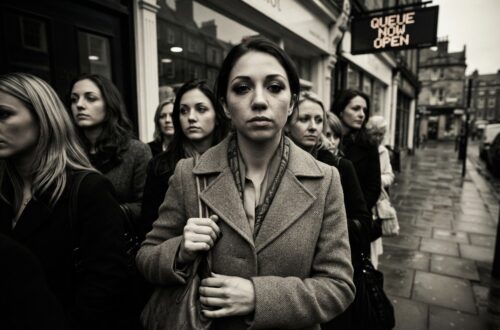
Messy, for me, was rarely disgrace. It was dancing until the soles of my feet felt like someone else’s idea. It was a drink I did not finish and a drink I should not have started. It was kissing someone I would not be kissing in daylight, or not kissing anyone and still feeling marked by the music. It was the Essex warmth of the ladies queue, a compliment thrown like a life ring, a girl you will never see again telling you your mouth looks perfect, which is a sentence that can carry you further than it should.
Then the air.
If you have only ever left a club into another indoor space, a taxi that smells of perfume and chips, you can miss the correction the sea offers. It is not moral. It does not tell you to be better. It just lowers the temperature around your face until you can feel the outline of yourself again. I used to think I was going outside to sober up. I was going outside to become specific. Inside, you are heat and noise and other people’s hands in the approximate area of your life. Outside, you are a woman with sore feet and a coastline.
I take the heels off. Of course I do. There is a whole literature of women doing this on pavements and it gets played for comedy, the defeated glamour, the walk of shame with accessories. I have never experienced it as shame. I experience it as logistics. The shoe was a decision for the room. The room is finished. My body would like a vote now. Bare foot or stocking on cold ground is an honest sensation. Honesty is useful at 3 a.m., when the stories you told yourself at 11 p.m. have started to loosen.
The water does too much. That is why I look at it. After a night of calibrated lighting, faces arranged by bulbs that flatter or flatten on purpose, the estuary is unafraid of scale. It does not care that your eyeliner has migrated. It has been doing this tide long before TOWIE and long before anyone decided Essex girls were a genre. Standing in front of something that large, after hours of being looked at and looking back, recalibrates the ego in a way I find almost kind. You are not the main character. You are also not nothing. You are a warm animal at the edge of a cold fact.
I talk to women about coming home as if home were only family, only the Sunday lunch that turns into an argument and then a record. That is part of it. Southend is the other part, the bit that does not sit at the table. I go back to Essex often because people I love are there. I also go back because this edge still knows my original voice. London will let you become a smoother sentence. Work will let you become a function. Dating will let you become a version that is easier to introduce. The seafront is rude to all of that. It remembers the girl who was newly possible and a bit too willing to translate other people’s vagueness. It remembers the first-class student who still wanted a sticky floor. It remembers the night that was only dancing and the night that became the first time I asked for exactly what I wanted.
I am not going to pretend every messy night ended in revelation. Most ended in chips and a headache and a text I should not have sent. The sea does not require the night to have been important. That is another thing photographs get wrong. We only take out our phones for the sky when it is performing. The mornings I think about most were ordinary in their mess. A friend sitting on a wall picking at a blister. Me laughing at nothing because tiredness had made me stupid in a gentle way. The faint embarrassment of seeing your reflection in a dark window and realising you are still wearing the face you chose for strangers.
If you have ever done the walk with another woman, you know how the conversation changes when the music stops. Inside we shout fragments. Outside we tell the truth in longer threads. Who you actually like. Who you will not be seeing again. Whether you felt wanted or merely handled. Whether you want to go home to your own bed so badly it is almost romantic. I have had some of my most precise talks about men with the water sulking beside us. Not therapy. Inventory. Women are good at inventory at dawn. The performance has clocked off. What remains is preference.
Preference is the thing I come back for, I think. Not nostalgia as a period drama of my own youth. Preference. What I like. What I will not do again. What kind of attention makes my shoulders drop. The seafront is where I have practised saying those sentences without an audience that needs me to be easy or impressive. You can be both, of course. I often am. But it is expensive to be both all night. Something has to give, and I would rather it be the shoes than the self.
There is a class note here I will not dance around, because women from places like this are always being asked to aestheticise their coastline for other people. Make it quirky. Make it grimy-chic. Make it a metaphor that flatters a reader who has never stood by the Adventure Island lights with cold toes. I am not interested in selling Southend to anyone. I am interested in how a woman uses a place to put herself back inside her life.
When I was at university in Colchester I had Wivenhoe Park for the 2 a.m. walk when a conversation would not die. Different water, milder, greener, student-shaped. I loved that too. It held a different girl, the one with library hours still on her hands and a head full of proofs. Southend held the earlier one and the later one at once. Family roots and adult returns. The park said possibility. The seafront said continuity. You need both if you are going to have a life that does not snap in half between who you were and who you are becoming.
I work with patterns now. Behavioural data, psychometrics, the quiet arithmetic of what people do. I can talk about availability heuristics and attachment without blinking. None of that helps as much as cold air when I have spent an evening performing competence in a room that only wanted a certain kind of woman. The mind can name the pattern. The body still has to come down the stairs. Place is how I come down the stairs.
I have stood on that front after a date that was supposed to be drinks and became three hours of free will and determinism and neither of us wanting to go home. Different energy, less messy in the club sense, still messy in the heart sense. The water does not distinguish. It will hold a woman who has been dancing and a woman who has been talking and a woman who has been doing both poorly. I find that democratic. Cities sort you. Venues sort you. The estuary is less fussy.
Sometimes I go in daylight, which is a different essay. Families, dogs, the pier stretching out like it is trying to leave Essex and not quite managing, which I relate to and also do not. Daylight Southend is public and a bit brash and I like it. Night-into-morning Southend is private even when other people are there. Everyone is in their own weather. You can pass a bride-to-be on a hen do at 4 a.m. and a fisherman and a boy eating chips like they are a moral argument, and none of you owe each other a story.
Women are told to romanticise their lives now, as if a filter could do the work of attention. I am not against a bit of staging. I like good lighting. I like a dress that feels like me. I like a hotel room that does not make my face look like a cautionary tale. Romanticising, though, can become another job. Another way to perform having a self. The seafront after a messy night is the opposite of that job. You cannot style it without looking slightly ridiculous, and the ridiculousness is corrective. Your hair is doing its own project. Your dignity is located somewhere near your ankles. And still, or therefore, you can feel astonishingly like yourself.
Myself, at that hour, is not the polished speaker of Southern English who can hold a room with a proof and a story. She is in there. She is also the girl who will talk to a stranger about her jacket. She is also tired. She is also a little in love with the fact of having a body that can dance and then walk and then stand still. I do not need to pick which one is the real Nikki. The cartoon of Essex wants one. Professional rooms want another. The water is uninterested in the brand.
I keep a private list of nights that changed the weather inside me. Several of them end here, or pass through here, even when the night started in Chelmsford or Brentwood or a room that no longer exists. The venue names fade. The feeling does not. Feeling is stored in temperature and smell and the particular sound of water hitting something you cannot see. If I close my eyes in a clean London kitchen I can still get, faintly, the metal and salt and frying oil of that hour. It lands in me like a password.
What does it open.
Not youth, exactly. I am in my late twenties, which is not a relic. It opens permission. Permission to be a woman who has been out and is not sorry. Permission to go home without calling home a failure of ambition. Permission to let a place hold you when a person has not. That last one matters more than I used to admit. There were nights the messy part was not the dancing. It was the hope. You leave a room still half inside someone who has not chosen you. The sea does not choose you either, which should make it worse and somehow does not. Impersonal love is still regulating. The tide does not text back. It also does not flinch when you are warm.
If you are a woman who goes back to a town people make jokes about, you will have been asked why. Why not stay in the city and make the origin into a fun fact. Why keep the weekends. Why walk a front that is not in anyone’s summer mood board. Because my original voice is not a fun fact. Because I learned how to be in my body here, between family and neon and cold. Because I do not want my seriousness to depend on disowning the nights that made me generous.
I think about other women on other fronts. Brighton with a different lipstick of cool. Blackpool. A Greek harbour after a wedding. A bench in Southend that is doing the same job as all of them. We take our finished evenings to the edge of something bigger and we wait to feel proportional again. That is not uniquely Essex. The Essex part is only that this is my edge, and I will not let it be taken from me by secondhand embarrassment.
Secondhand embarrassment is the tax. You feel it when someone you want to impress hears where you went and smiles with their teeth only. You feel it when a man you like says “Southend” the way he might say a punchline. You feel it in yourself, traitorously, when you see the town through a visitor’s eyes and notice the tired bits first. I have paid that tax. I am late on the payments now. The older I get, the more I think embarrassment is often just class wearing a fashion week lanyard.
Come with me in your head, if you want the scene without the sneer. The sky going from club-black to a thin, practical grey. A gull with shift-worker energy. Your friend leaning on you because her ankle has opinions. The last of your lipstick on a chip wrapper, which is a sentence I cannot make elegant and will not. Someone in a taxi shouting a first name that is not yours. The pier lights thinning. Your own name coming back to you, not as a brand, as a fact. Nikki. Feet cold. Mind clearer than it has any right to be.
In that clarity I have decided things. To leave a man who liked the idea of me more than the map of me. To go back to the library on Monday without treating the weekend as a crime scene. To keep the dress and the degree. To stop translating my want into something daintier. The sea did not tell me those things. I told myself them because the sea had turned the volume down on everyone else.
That is what I mean by holds me. Not comfort exactly. Holding can be firm. A good hold says stay here until your breathing is useful again. I stand until I can feel my mouth as my mouth and not as an instrument for being liked. Then I get in the car or the taxi or onto the slow walk inland, heels dangling, and I re-enter the ordinary rooms. Kettle. Makeup off. Phone face down, if I am being kind to myself. Sleep that is not glamorous.
Morning will make some of the night look smaller. That is fine. Not every evening needs to survive contact with breakfast. The ones that do survive are rarely the ones that looked best while they were happening. They are the ones that left a temperature change. I can still get that temperature off the seafront even now, years of repetition later, which is how I know it is not nostalgia. Nostalgia wants the night back. This is a relationship with a place. You do not want the same conversation every time. You want the person, or the pier, to still recognise you.
I am recognised here in a way London never quite manages. Not because everyone knows my name. Because the scale is right. Because my family weather is in the bakers and the shortcuts. Because I can hear, under my careful Southern English, the older music of how I used to speak, and it does not shame me. The original voice is not slang and it is not a stunt. It is simply the voice that learned to talk beside this water.
If you have a place like that and you have been neglecting it to seem consistent with your new life, consider this a nudge from a woman who tried consistency and found it thin. You can be the person with the MSc and the person with the salt air. You can be tired and certain. You can take the shoes off. You can look at water that is doing too much and let it. You can go home without calling it going backwards.
Forward is not always a postcode further east or west of where you started. Sometimes forward is standing still long enough to remember which way your face points when nobody needs you to perform a county or a career or a night. Mine points at the estuary more often than is fashionable. I am not sorry.
The next time the night empties you out, in Southend or anywhere with an edge, take the long way. Hold the shoes. Let the air finish the sentence the music started. Do not photograph it unless you want to. The holding is not in the camera. It is in the cold, and in your own name coming back, and in the untheatrical fact that you are still here, a woman at the end of an evening, being kept by a piece of land that never asked you to be less.

nikkiessex
I am Nikki. 40 years old. Essex-born. I trained in mathematics and psychology, then made a living in behavioural work: people, patterns, the quiet data underneath what we say we want. I teach the same things I write about. How minds lean. How loyalty shows up after the row. How to keep a clear head without going cold. I have been writing on the internet for five years. Not as a brand exercise. As a way of thinking in public. If you are new, start with the pieces that feel like a table you already know. I will meet you there.


You May Also Like

FED Wednesdays Sports Kit Energy Turning Messy After Midnight
Chips in the Taxi Queue After Dancing Until It Hurt