
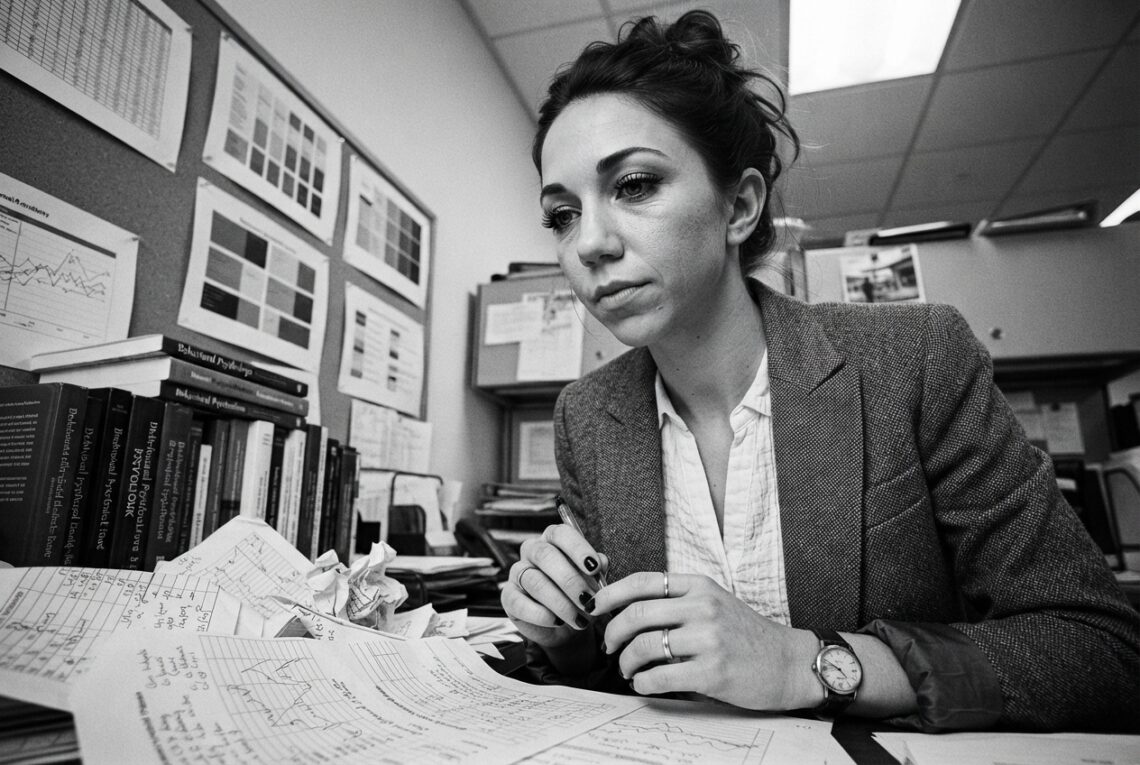
Why People Patterns Pay Better Than Perfect Spreadsheets Ever Could
People keep assuming my job is Excel with better lighting. I can see it happen in real time. Someone asks what I do, I say behavioural data, and their face does that polite little collapse, the one that means they have filed me under spreadsheets and will now ask whether I like working from home. I do not mind spreadsheets. I mind the idea that a clean grid is the point.
A spreadsheet is a container. It is very good at sitting still and looking finished. People patterns are messier, and they pay better, not always in the salary sense, though that helps, but in the sense that they tell you something true. Numbers without behaviour are just tidy. Behaviour without numbers is just a story you liked. I work in the bit where those two stop pretending they are strangers.
I grew up in Essex, Chelmsford and Southend in the family mix, and I learned early that people will decide who you are before you have finished the sentence. That is useful training for this job, even if nobody puts it on a job description. You watch the assumption form. You watch what they do after it. Then you decide whether to correct them or let the work do it later. I used to correct them immediately. Now I pick my moments. It is more efficient, and slightly funnier.
At the University of Essex I did mathematics first, properly, first class, the unromantic kind of graft that looks glamorous only in retrospect. Then psychology, because I could not leave the human part alone. Campus at Colchester has this odd double life, Wivenhoe Park looking almost too pretty for the amount of statistics happening inside it. I liked that collision. Serious study and student nightlife in the same week, sometimes in the same day. I never thought one cancelled the other. I still do not.
The first time a lecturer treated my accent as if it meant I was less precise, I remember the heat in my face and the very calm decision to outscore the room. I did. It did not make me saintly. It made me organised. Conscientiousness is not a personality trait I perform at parties. It is how I recovered from being underestimated without turning it into a five act drama.
People think behavioural research is cold because the language sounds cold. Psychometrics. Response latency. Item discrimination. Reliability coefficients. None of that is ice. It is just vocabulary for things you already know in your body. How long someone pauses before they answer. Whether they say they value honesty and then dodge the honest question. Whether a survey item actually measures what it claims, or whether it measures how much the respondent wants to look decent.
I like that last one more than I should. Social desirability is one of the most human things in a dataset. Of course people want to look decent. Of course they will tidy themselves for a form. The work is not to catch them out like a customs officer. The work is to design the question so the truth has somewhere to sit.
That is the kindness bit, and I mean it. Precision without kindness becomes a sport. Kindness without precision becomes a mood. I am not interested in moods dressed up as insight. I am interested in the moment a pattern becomes useful to an actual person. A product that stops wasting someone’s time. A process that stops punishing the anxious ones for being anxious. A piece of research that does not treat women as an afterthought category in a footnote.
Women are reading a lot, these days, about choosing themselves, about peace over a partnership that costs too much, about work that does not require you to shrink. I notice that in the culture and I notice it in the data. People will tell you they want flexibility. Then their behaviour shows they want predictability with a little room to breathe. Those are not the same request. If you only listen to the slogan, you build the wrong thing. If you only worship the spreadsheet, you miss why the slogan appeared in the first place.
My job, at its least glamorous, is sitting with incomplete answers and refusing to invent prettier ones. Completeness is a fantasy. Human data arrives late, contradictory, and occasionally handwritten in a box that was meant to be numeric. I have a high tolerance for that. Perhaps because I also have a high tolerance for people. Extraversion gets described as being loud. Mine is more like being energised by the fact that other minds exist. I like rooms. I like the moment a conversation turns from clever to honest. I like remembering what someone told me three weeks ago and watching their face when they realise I kept it.
That memory habit is not separate from the work. Pattern recognition is just memory with a method. You notice that the same kind of delay predicts the same kind of dropout. You notice that people who rush the first six items will lie more neatly on the seventh. You notice that a team says they want innovation and then rewards the person who never surprises anyone. None of this requires a crystal ball. It requires attention, and attention is a skill, not a vibe.
I count things when I am anxious. Tiles, steps, beats in a song. It started as a private quirk and became, embarrassingly, part of how I think. Probability leaks into ordinary life once you have spent enough years with it. The odds of that happening twice. The base rate nobody wants to hear about because the anecdote is prettier. The difference between a signal and a coincidence that flattered you.
Dryly, I should admit that this makes me a slightly annoying person to watch films with if you invite the wrong version of me. I will last twenty minutes before I start mapping attachment styles onto the couple as if the director asked. I do try to keep that indoors. Mostly.
The stereotype of my job is a man in a lanyard pointing at a dashboard and saying the word robust as if it were a personality. The reality, at least in my corner of it, looks more like this. You clean a file. You argue with a colleague about whether a scale is measuring anxiety or just measuring whether someone had a terrible night’s sleep. You write a note that says we cannot claim causation here, however much the stakeholder would enjoy the sentence. You go home to Essex when you can and eat a Sunday lunch that turns into politics and then someone puts a record on. Then on Monday you do it again, hopefully with slightly better questions.
I love a well structured argument. I love mathematical elegance, the kind that makes you sit back because the solution is almost too neat to have been allowed. Behavioural data rarely gives you that neatness. That is why I trust it more than a perfect spreadsheet. Perfect is often a sign that somebody shaved off the living bits. A model that fits too beautifully can be a model that has stopped meeting the world.
There was a phase, early on, when I thought the point was to make people look rational. That was ambition mixed with a first class degree and a slightly punishing streak. Rationality is not the natural state of a nervous system. It is a temporary achievement. If your work assumes everyone is a tidy utility maximiser, your work will be surprised every Thursday. I would rather start from the premise that people are patterned, biased, loyal, frightened, hopeful, and occasionally magnificent. Then I measure what I can without pretending I have measured a soul.
Applied psychometrics sounds like a locked cupboard. In practice it is closer to portraiture, if portraiture came with confidence intervals. You are asking whether this set of items can stand in for a thing we care about. Confidence. Risk tolerance. Attention. Likelihood to stay. Likelihood to trust. Those are not small questions. Treat them casually and you will build a machine that is rude to the wrong people.
I am not a therapist. I am careful about that line. Knowing attachment theory does not give you a licence to diagnose your friends over wine. It does give you language for why a delayed text can feel like weather. Anxious secure leaning, if you want the shorthand. I crave depth and consistency. I notice micro shifts. I can also laugh at myself for turning a typing bubble into a thesis. Self awareness is not the same as self control, but it is a start, and it belongs in this work. If you cannot name your own patterns, you will project them onto every dataset and call it insight.
The unpaid part of the job, the part nobody bills for, is remaining curious when the first explanation is flattering. Flattering explanations are very cheap. They arrive fully dressed. The useful explanation usually looks a bit underdressed and asks you to check the sample.
I think about university more than I expected to at this age. Not in a nostalgic fog. In specific rooms. Late library sessions that ended with a walk across the park because neither of us wanted the conversation to stop. A traffic light party where I wore yellow on purpose and then spent half the night talking about cognitive dissonance with a boy from my stats module instead of obeying the colour code. That still feels like the origin story of the job, even if it sounds like a student anecdote. I wanted the proof and the story in the same night. I still do.
Nights out in Chelmsford, Southend seafront with heels in one hand, the particular warmth of making friends in the ladies and never seeing them again. Those memories are not professional credentials. They are fieldwork I did not know I was doing. People reveal themselves when the lighting is unflattering and the music is too loud. They also reveal themselves in a survey they think nobody will read closely. Same species. Different venue.
There is a version of this career that becomes contempt. You see enough bias, enough performative answers, enough committees in love with their own dashboard, and you could decide humans are a rounding error. I have no interest in that pose. It is lazy, and it is not even accurate. Most people are trying to get through the day with their dignity intact. If your model cannot make room for dignity, your model is incomplete.
Kindness in this field looks practical. It looks like not over claiming. It looks like writing in English when you could have written in a fog of terms. It looks like noticing that a question is humiliating before you send it to two thousand people. It looks like remembering that behind every row is someone who did not wake up hoping to become your variable.
I make an effort with how I look because I enjoy it, not because the office requires a costume. A well cut dress, good hair, lighting that does not make everyone look unwell. That is not separate from taking the work seriously. I watched the Essex girl joke do the rounds for years, the loud orange unintelligent version, and I decided I would be the counter example without becoming joyless. I can hold a room with a proof and a story. I can also dance until my feet hurt. Neither one is the disguise for the other.
When I say people patterns pay better, I mean they compound. A spreadsheet tells you what happened inside the columns you bothered to create. A pattern tells you what is likely to happen when the context changes. That is the difference between reporting and understanding. Reporting is necessary. Understanding is what you can build on.
I will give you a plain example. A team wants to know why users abandon a process halfway through. The spreadsheet says drop off at step four. Useful, as far as it goes. The pattern work asks what step four feels like in a human nervous system. Is it a trust problem? A shame problem? A working memory problem? Are you asking people to recall a number they do not have while also implying they should already know it? You would be astonished how often a so called engagement issue is just a design that slightly panics people and then punishes them for panicking.
Once you see that, you stop writing pious recommendations about communication and start changing the step. That is applied work. That is why I stayed. I like theory. I like it more when it leaves the building and does something decent.
There is humour in the job if you keep your eyes open. Stakeholders who want a single number the way some people want a horoscope. Colleagues who fall in love with a visualisation because the colours are obedient. Surveys that ask twelve questions and then a thirteenth that is basically, but how do you really feel, as if the respondent has been holding back for sport. I have written that thirteenth question. I am not above it. I am only above pretending it is magic.
The romantic in me, and she is not shy, thinks there is something intimate about paying attention this closely. Not romantic in the date night sense. Romantic in the older sense of taking the inner life seriously. You cannot do this work well if you find people boring. You also cannot do it well if you need them to be fascinating all the time. Most behaviour is ordinary. Ordinary is where the signal lives.
I dislike pretension. I dislike cruelty dressed as banter. I dislike psychology used as party tricks, the dinner table diagnosis, the man who has read half an article about narcissism and is now armed. Data can become a party trick too. Look, I found a correlation. Congratulations. So can I, if I torture the file long enough. The adult version of the job is knowing when not to perform intelligence.
Loyalty matters to me in people and in methods. Stay with the question. Do not abandon it the minute a prettier metric appears. Follow through. That is conscientiousness again, the unfashionable one. Two degrees were not a personality rebrand. They were evidence that I finish things, even when the middle is dull. A lot of analysis is dull. Anyone who tells you otherwise is selling a course.
What I want from the work, if I am honest, is the same thing I want from a conversation. To be accurate. To be warm enough that accuracy does not feel like an attack. To leave the other person feeling more possible, not more managed. That sounds soft until you try to operationalise it. Then it becomes design, wording, sampling, ethics, and the discipline of not inflating your findings so a slide deck can clap.
I still go home often. Essex coastline in winter, which I prefer to the postcard version. Family that values hard work and a good night out. Arguments that do not end the affection. That texture keeps the job from floating off into abstraction. You can talk about populations all day. Then you sit across from someone who has had a long week and you remember that a population is just a lot of long weeks standing close together.
If you are a woman in a quantitative room, you will be invited, at least once, to be either the warm one or the sharp one. That invitation is a trap with nice stationery. Warm first, sharp second, is not a compromise. It is the order that makes people tell you the truth. They relax, then they get precise. That is also how I flirt, for what it is worth, though that is not the subject of the dashboard.
I notice probability in everyday life because I cannot switch it off. Two coincidences in a week do not make a law. One vivid story does not beat a base rate, even when the story is mine. This is not a personality that makes every dinner sparkling. It does stop me building a whole identity on an outlier. In research that is hygiene. In a life it is mercy.
So no, the job is not spreadsheets. Spreadsheets are the crockery. The meal is what people do, repeatedly, when they think the question is simple. I take that seriously. I also refuse to make it grim. There is pleasure in a clean method, in a sentence that finally fits, in the moment a messy file turns into a recommendation you would be willing to defend in daylight.
People patterns pay better because they stay useful after the file is closed. They change how you listen. They change what you build. They change whether you treat a hesitation as stupidity or as information. I know which one I would rather be paid for. I know which one I would rather be.
If this still sounds cold to you, you may be listening for the wrong temperature. I am not trying to freeze anyone. I am trying to see them clearly enough that the next decision is a little less wasteful. That, to me, is a form of care. It just happens to come with syntax and a stats package.
And if you still want to call it spreadsheets, go ahead. I will be over here with the living bits, making sure they do not get tidied out of existence for the sake of a grid that looks finished.

nikkiessex
I am Nikki. 40 years old. Essex-born. I trained in mathematics and psychology, then made a living in behavioural work: people, patterns, the quiet data underneath what we say we want. I teach the same things I write about. How minds lean. How loyalty shows up after the row. How to keep a clear head without going cold. I have been writing on the internet for five years. Not as a brand exercise. As a way of thinking in public. If you are new, start with the pieces that feel like a table you already know. I will meet you there.


You May Also Like
The Quiet Glamour Of Being Good At Invisible Work
Teaching Consent As Curiosity, Not A Legal Afterthought